In northern Kazakhstan, a futuristic city has risen from the forsaken landscape and post-Soviet rubble. In 1997 President Nazarbayev had declared that the country’s capital would no longer be located in Almaty, Kazakhstan’s largest city, but move to a small town previously known as Akmola, Tselinograd, and Akmolinsk. Built with political ambition and oil money, and renamed Astana, it is Kazakhstan’s new capital city.
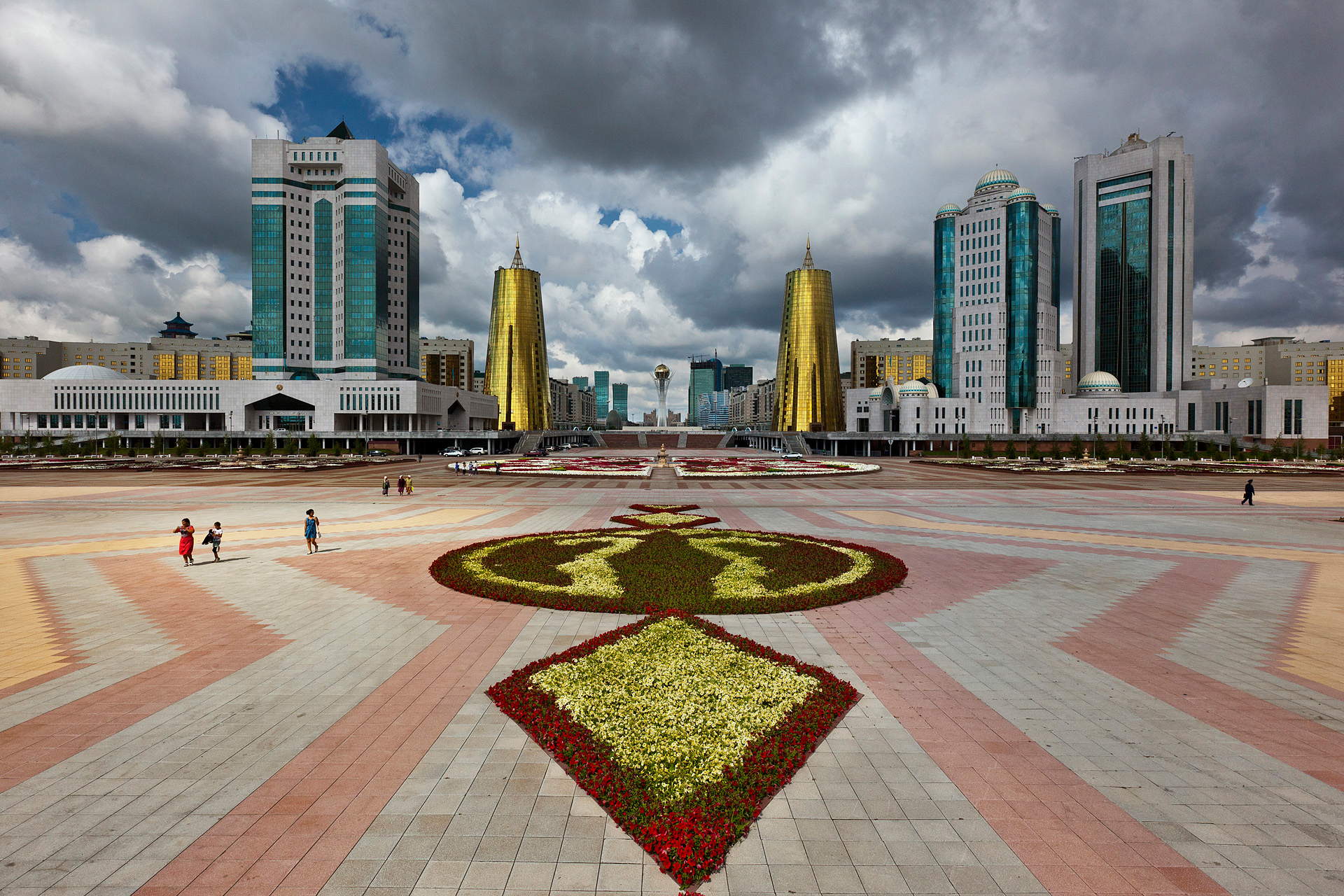
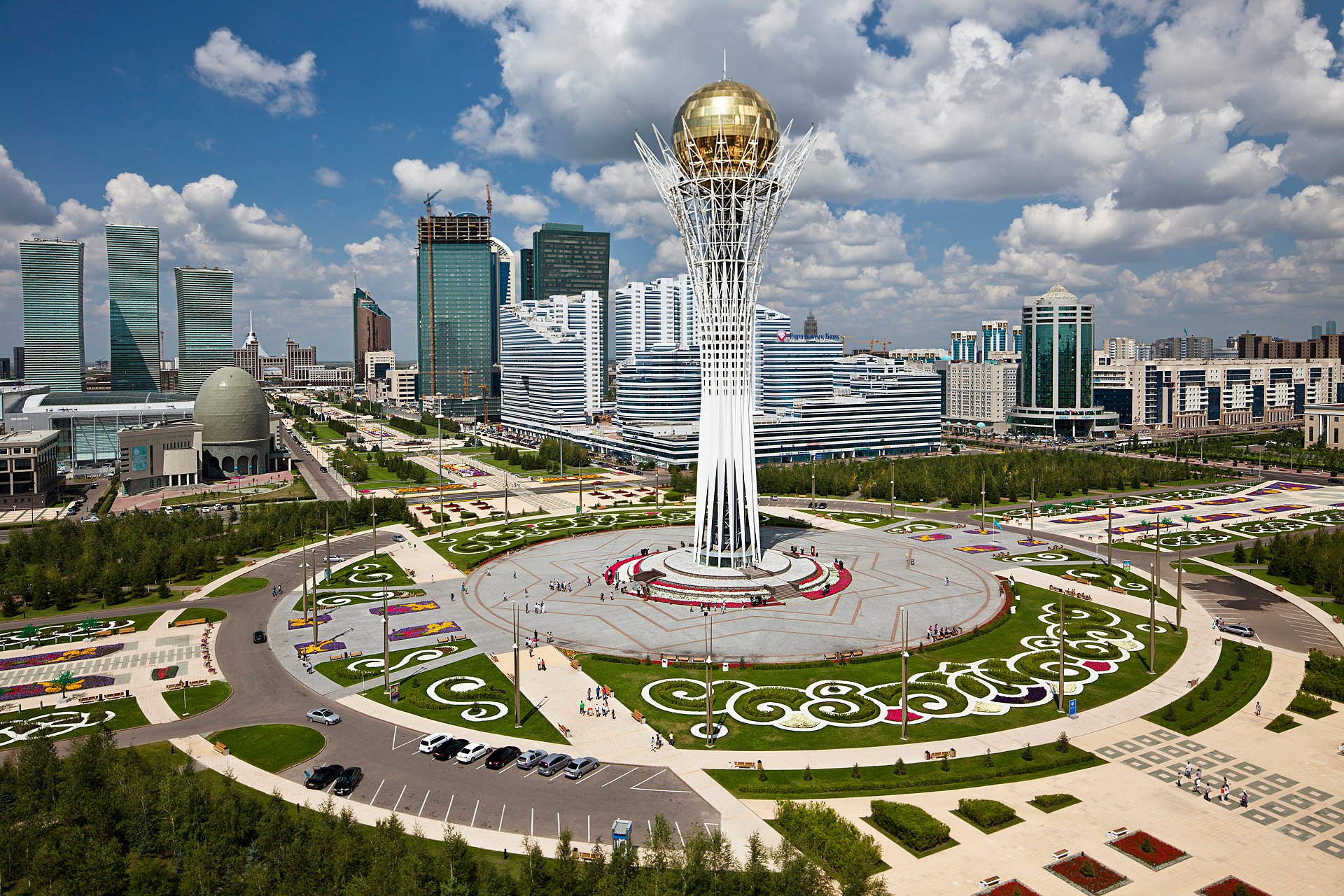
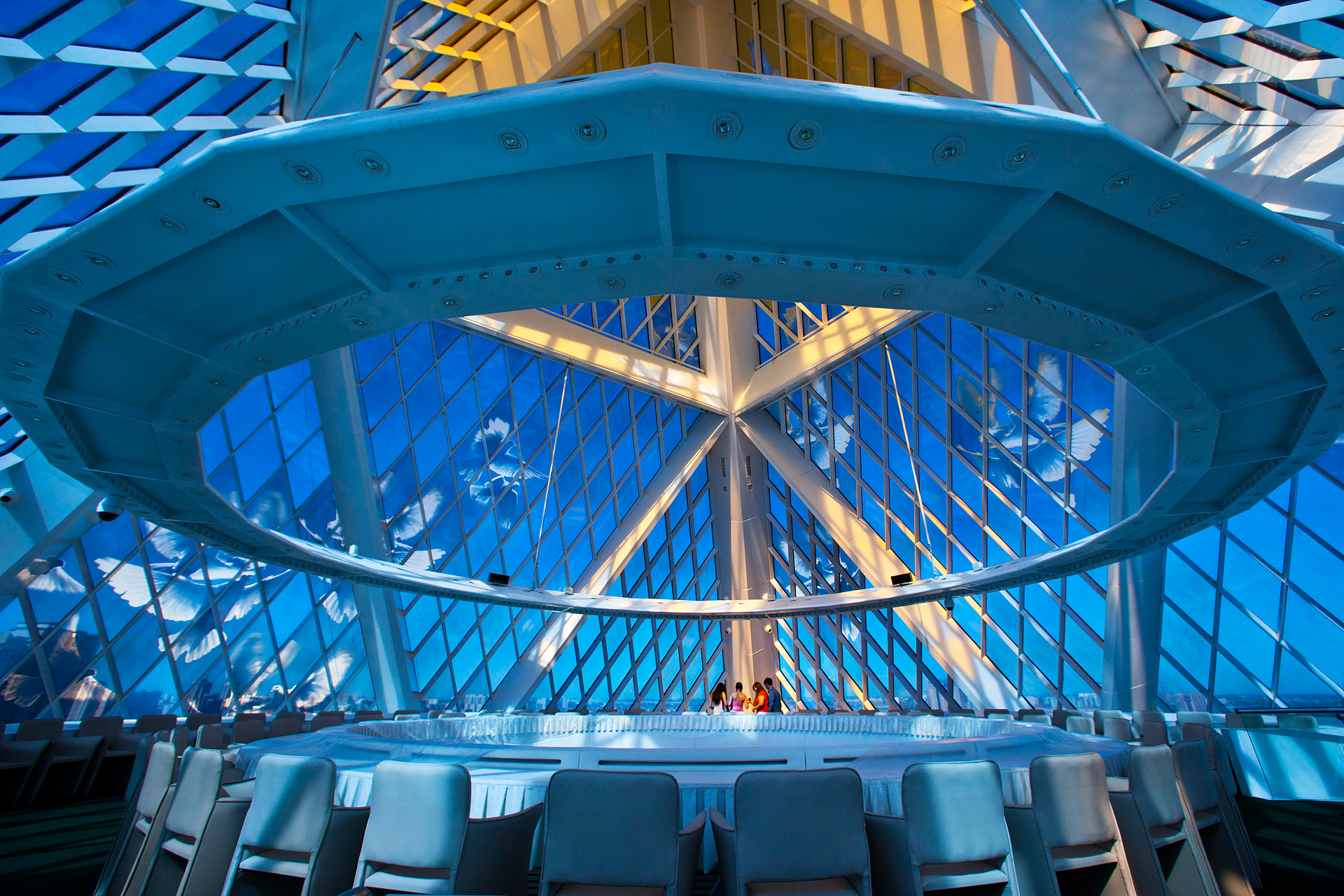
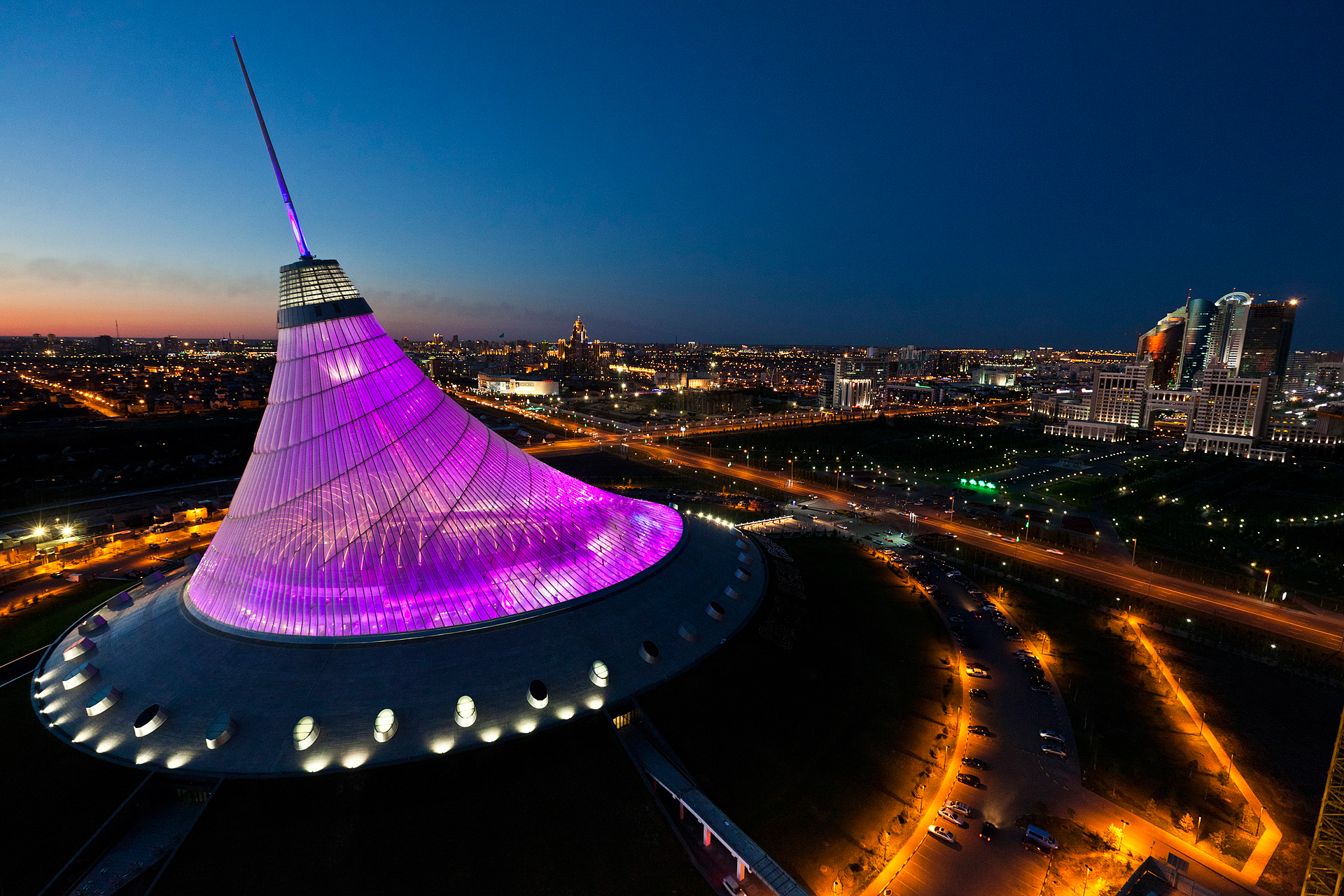
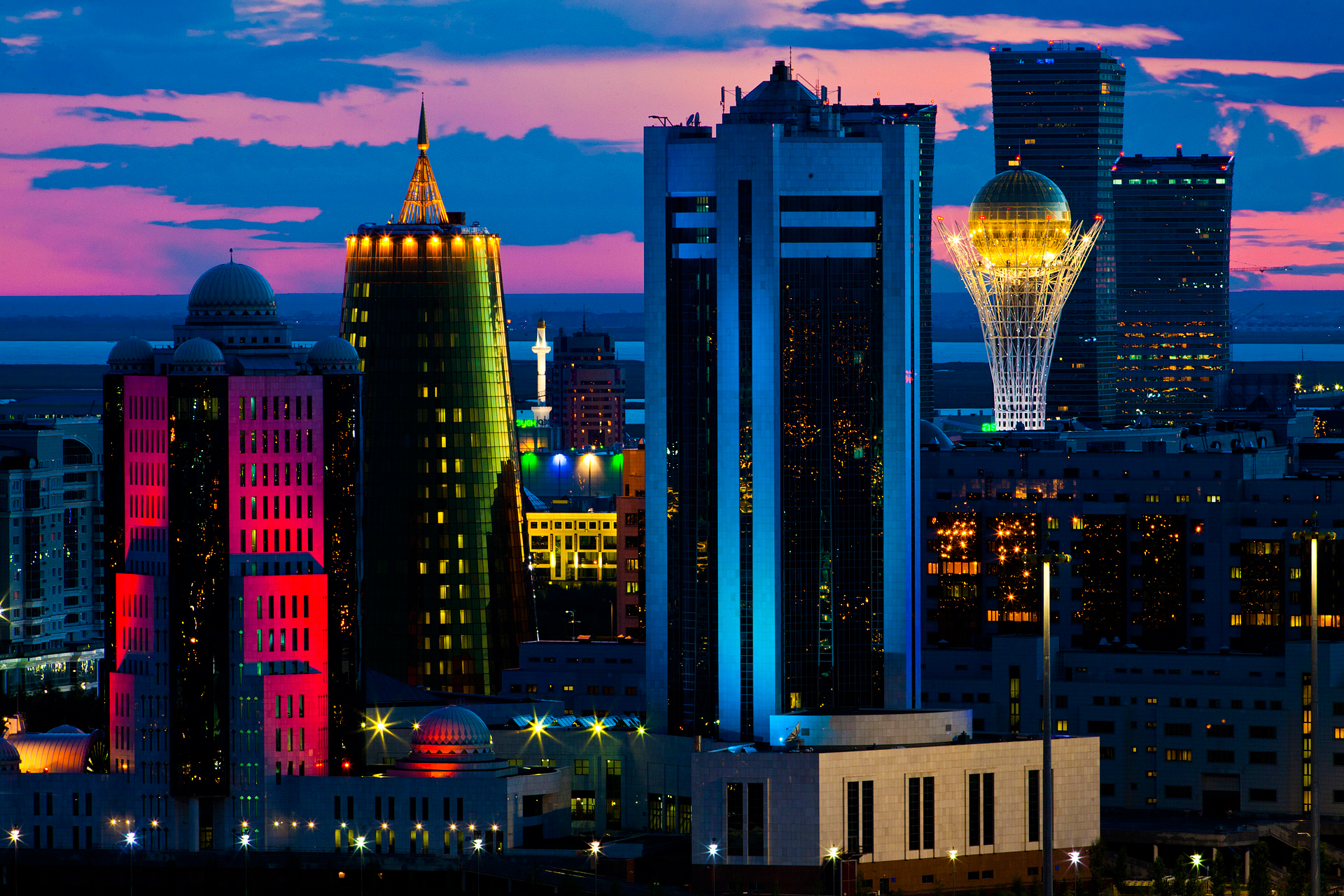
Soviet-era buildings were demolished and replaced by soaring pinnacles of commerce, entertainment, and culture, designed by international star-architects like Sir Norman Foster and Kisho Kurokawa. Perhaps most notably is the Baiterek, the monumental symbol of Astana. Representing a poplar tree, it is emblematic of Kazakhstan’s self-image: constructed of steel, concrete, and glass, it holds court in the middle of a majestic central avenue lined with futuristic buildings. The Palace of Peace and Reconciliation is a pyramid that spans 62 meters. A 400-million-dollar mall resembles a nomadic tent, and the President’s Palace looks like Washington’s White House.
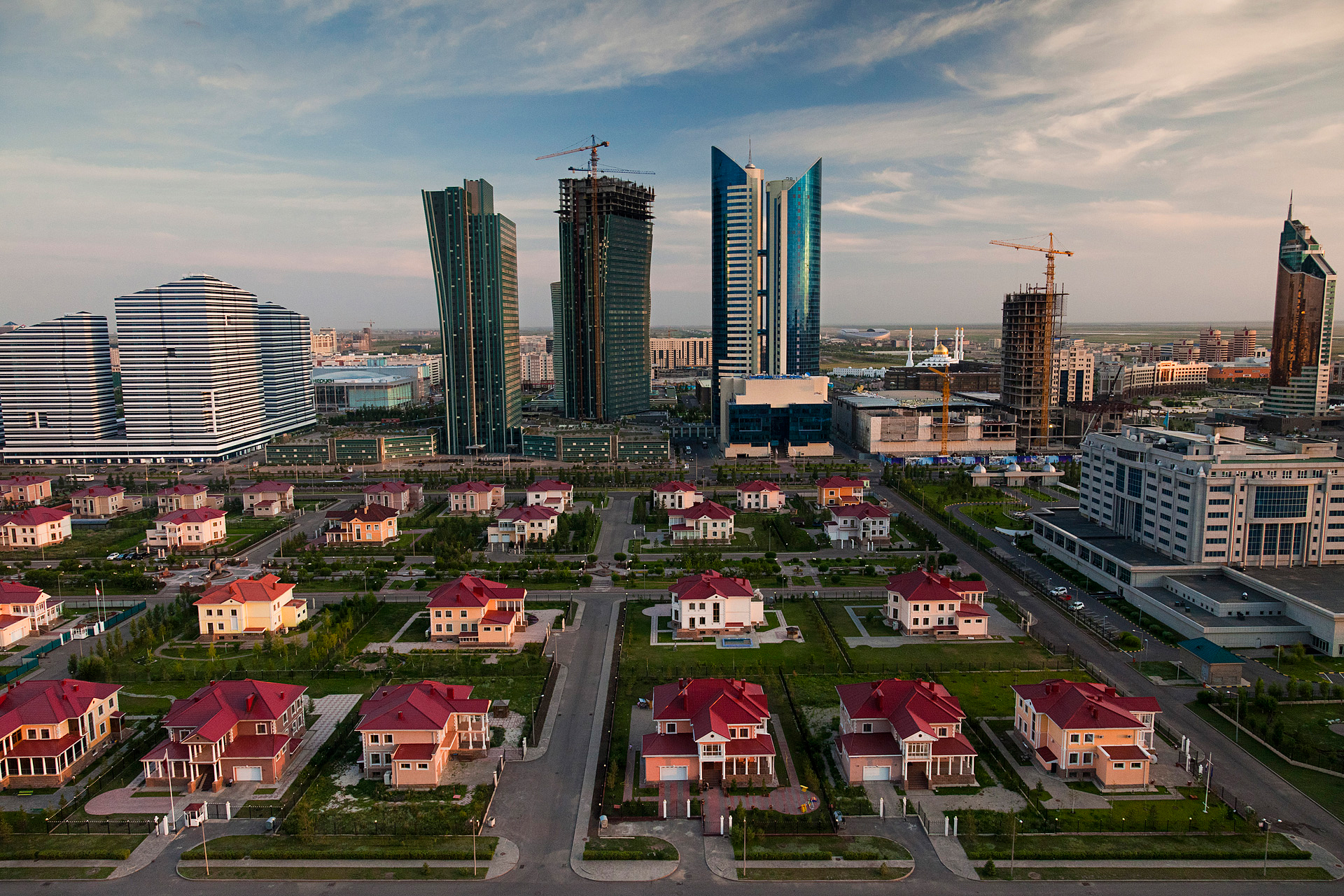
In a stunning contradiction of worlds, today’s Astana looks like a Manhattan-in-the-Steppe. As exotic as Dubai, it is lit at like Disneyland at night. “The results are eclectic, visually arresting, and not to everyone’s taste. But love it or hate it, Astana is brash and grandiose — and wildly attractive to young strivers seeking success,” says writer John Lancaster.
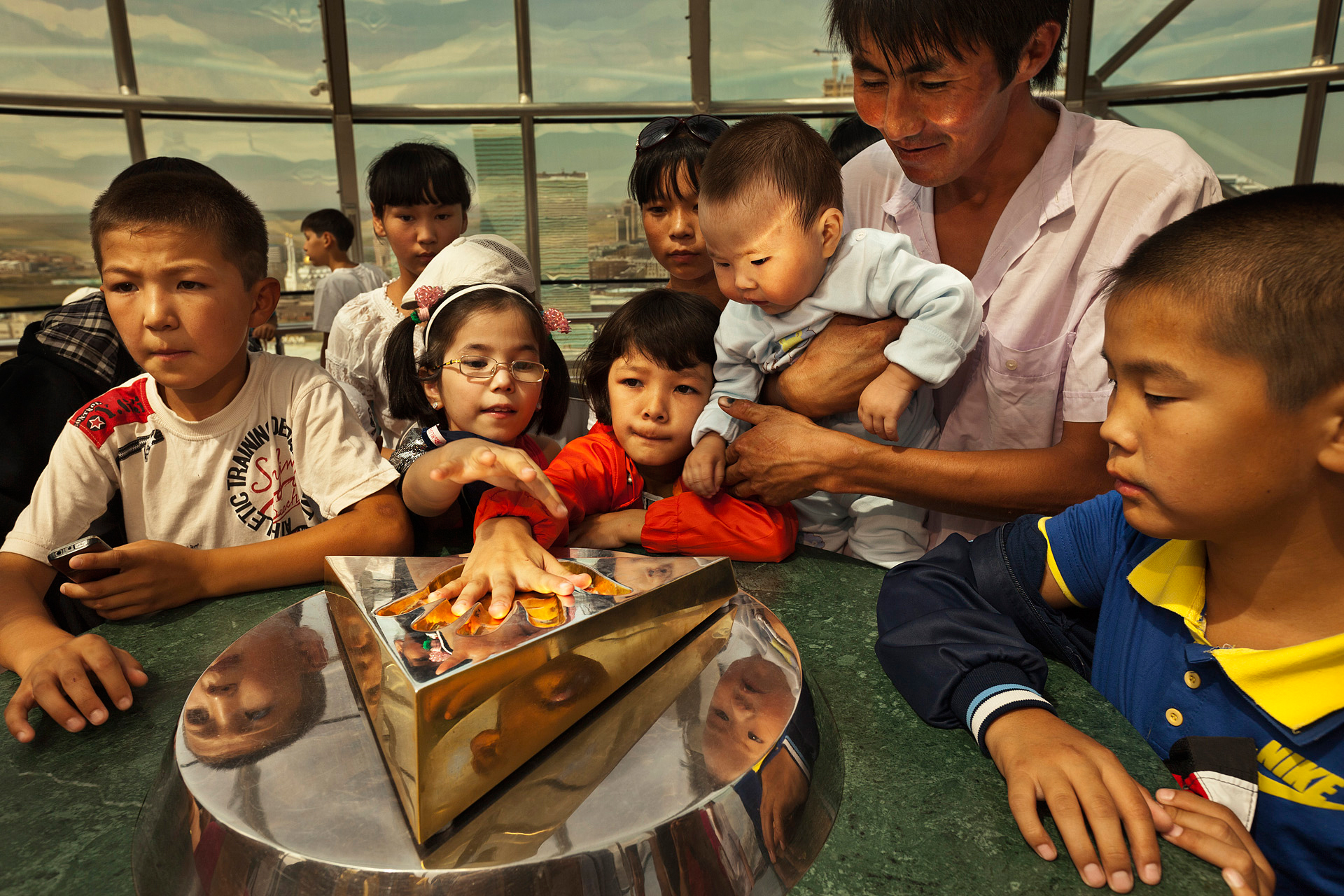
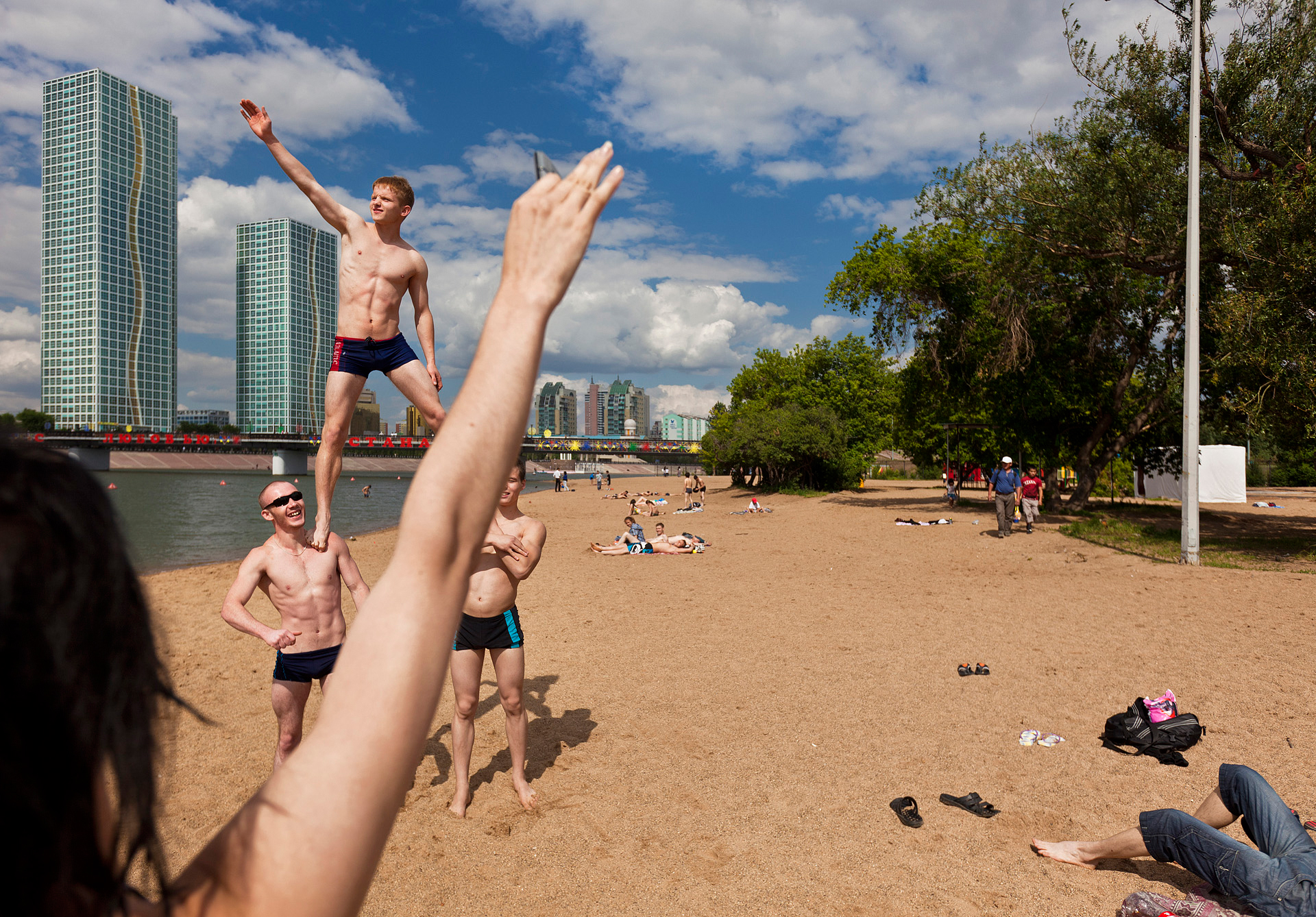
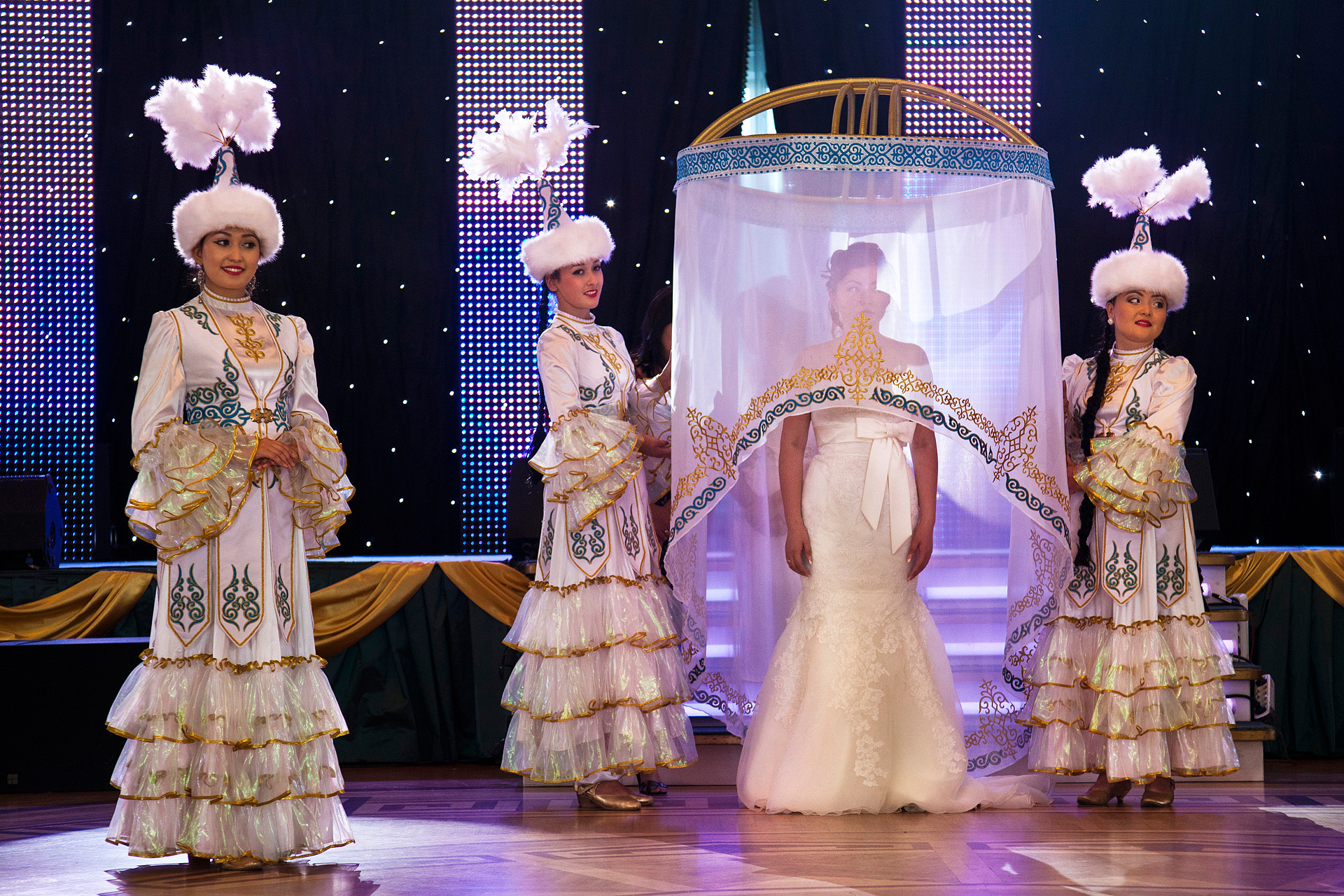
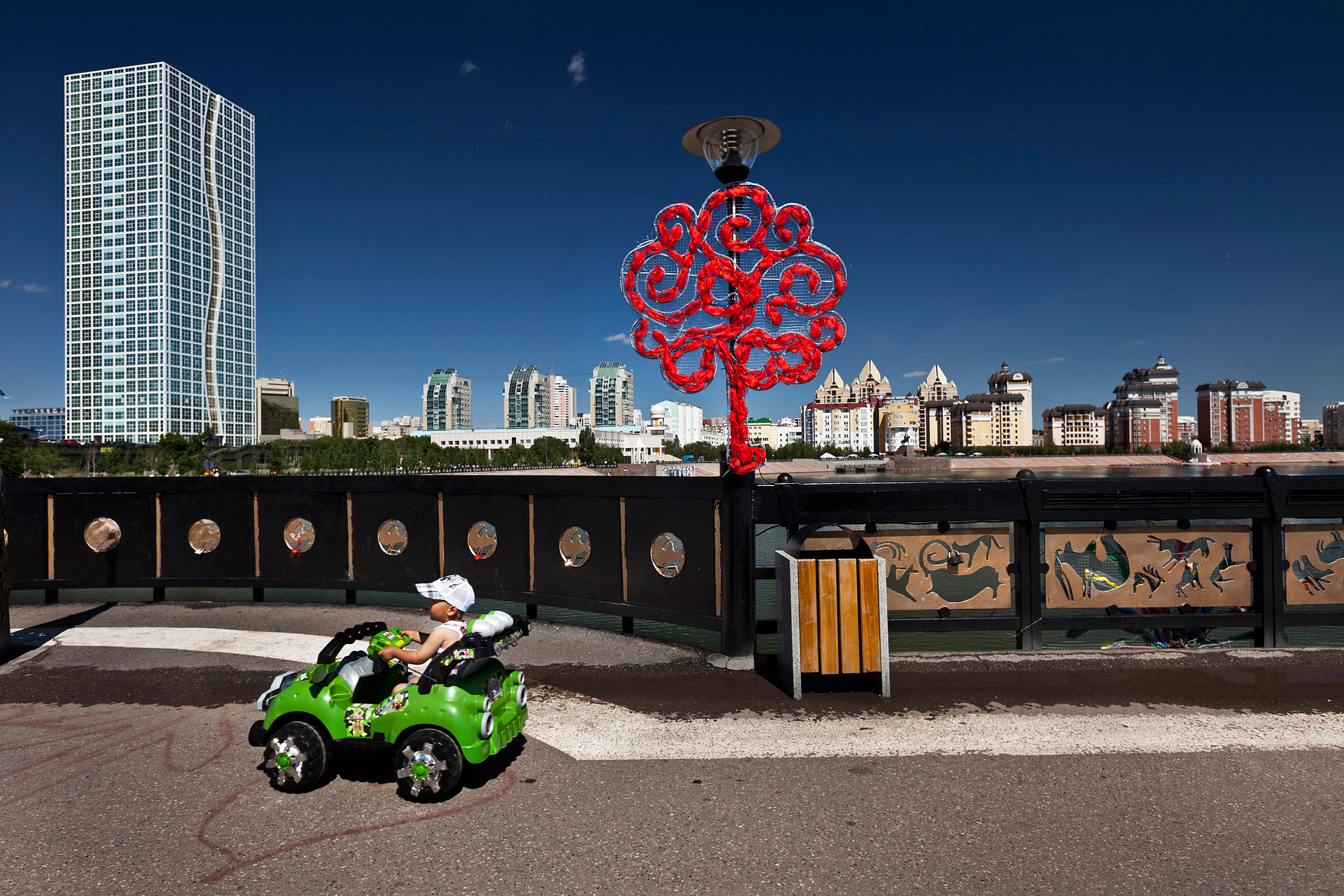
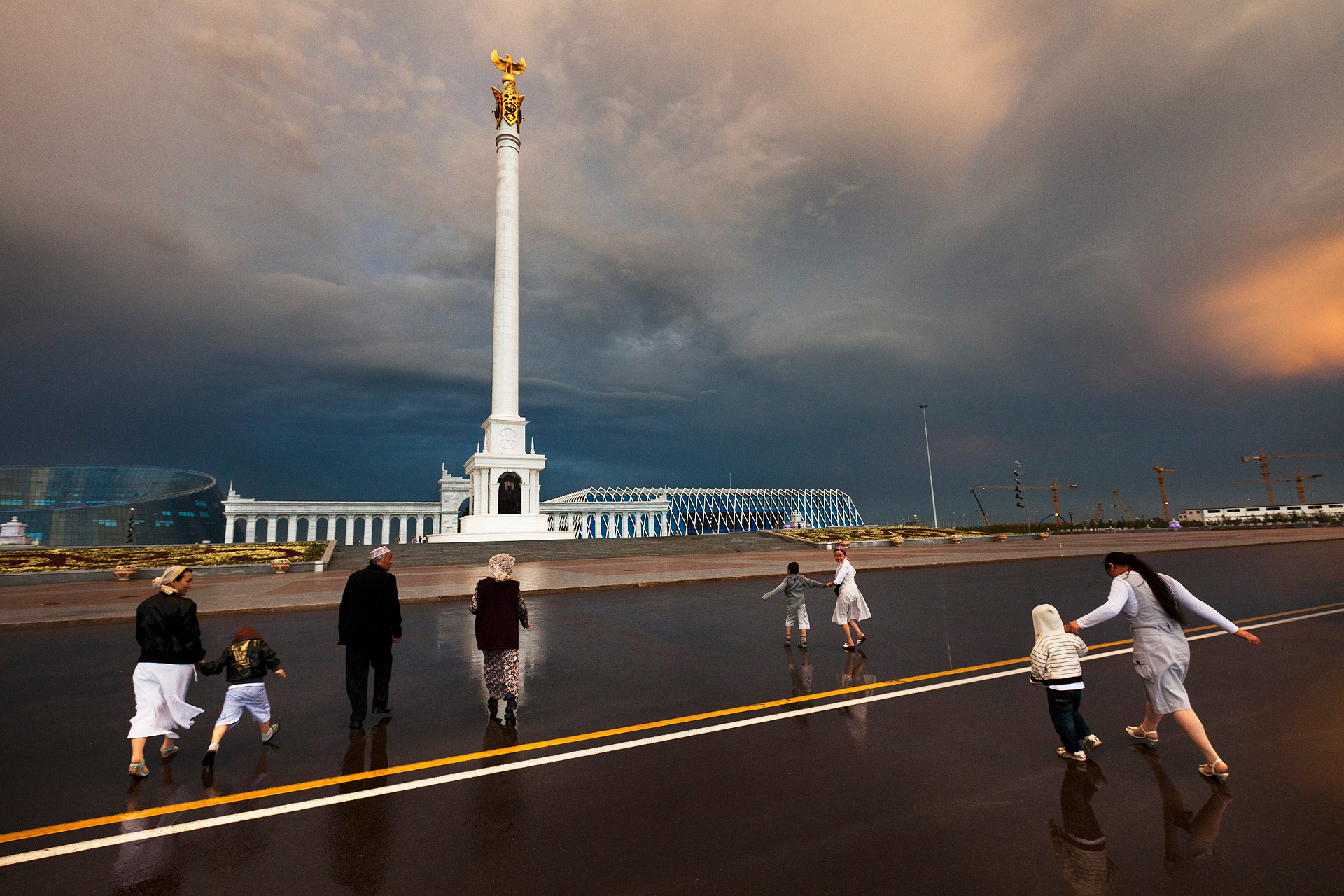
Pulsing with superlative engineering, global cash and a futuristic architecture, Astana represents the country’s dream of a limitless future. The photographs explore the architecture and the daily life in the sparkling Kazakh capital where population swelled from 250,000 to more than 700,000 in a decade.